
You finished the film. You survived the shoot, the reshoots, the sound mix that took three weekends longer than planned, and the festival submission fees that quietly drained your savings account. Now you’re staring at the one question every independent filmmaker eventually has to answer: where does this thing actually go once the festival run is over?
For a long time, the honest answer was “not many places.” A handful of gatekeepers decided which films got seen and which ones sat on a hard drive collecting dust. That’s no longer true. Video on demand (VOD) platforms have quietly become the backbone of independent film distribution, giving filmmakers a direct line to audiences without needing a studio deal, a theatrical release, or a distributor with deep pockets. If you’re weighing your funding options before you even get to distribution, it’s worth reading about how to pre-sell a film as a way to finance production against future distribution rights.
But here’s the catch nobody tells you upfront: not all VOD platforms are built the same, and picking the wrong one can mean your film disappears into a catalogue of 40,000 other titles, never to be found again. This guide walks through the platforms that actually matter for independent filmmakers in 2026, how they pay, who they’re best suited for, and how to think about your distribution strategy like a business decision — not a lottery ticket.
If you’re building out a broader content or media strategy and need help thinking through distribution, marketing, or production support, the team at Greenroad Nigeria Limited works with creators and producers navigating exactly this kind of decision, including through our dedicated films distribution service.
What Is VOD, and Why Does It Matter for Independent Filmmakers?
Video on demand simply means content that viewers can watch whenever they want, rather than at a scheduled broadcast time. It’s the model that killed appointment television and gave rise to streaming as we know it. For independent filmmakers, VOD matters because it removes the biggest historical barrier to distribution: shelf space. A physical DVD rental store only had so much room. A streaming catalogue, in theory, has infinite room.
That said, “infinite room” doesn’t mean “infinite visibility.” Understanding the different VOD monetisation models is the first step to picking the right platform for your film.
The Four Main VOD Models
- TVOD (Transactional VOD): Viewers pay to rent or buy your film outright. Think Apple TV, Amazon Prime Video (rental/purchase), Google Play, and Vudu. This is the oldest digital distribution model and, according to Vitrina’s 2026 breakdown of independent film distribution platforms, it’s still relevant today, with iTunes, Google Play, and Vudu collectively representing a meaningful revenue window for filmmakers.
- SVOD (Subscription VOD): Viewers pay a recurring subscription fee, and platforms pay filmmakers either a licensing fee or a share of subscriber engagement. Netflix and MUBI fall into this category. If Netflix specifically is on your radar, we’ve written a separate, more detailed guide on how to get your film on Netflix.
- AVOD (Ad-Supported VOD): Free to viewers, monetised through advertising. Tubi and Pluto TV are the biggest names here.
- FAST (Free Ad-Supported Streaming Television): Linear, channel-based streaming that mimics traditional TV but runs entirely online, monetised the same way as AVOD.
Most experienced producers don’t pick just one. As Vitrina’s guide puts it plainly, the most significant development in VOD distribution for independent filmmakers in 2026 is the dominance of hybrid models, with the old “theatrical first” approach largely obsolete for films under $10 million in budget. In other words: stack your platforms, don’t marry just one.
What to Look for Before You Sign With Any VOD Platform
Before we get into specific platforms, it’s worth pausing on criteria. Too many filmmakers pick a platform because it sounds prestigious, then get disappointed when the payout doesn’t match the reputation. And before you sign anything, it’s worth understanding how film distribution deals work, since VOD licensing terms often use the same language as traditional distribution contracts.
1. Revenue Share and Payment Structure
Every platform takes a cut. The question is how much, and how transparently. Some platforms pay you directly; others route your film through an aggregator that takes an additional percentage.
2. Audience Reach vs. Audience Fit
A massive audience means nothing if it’s the wrong audience. A horror film will likely thrive on a mass-audience AVOD platform, while a slow-burn arthouse drama will get buried there and do far better on a curated platform. As Filmcane’s 2026 guide to streaming platforms for independent films notes, a horror film that thrives on Tubi might disappear on MUBI, while a documentary that finds its audience through Kanopy might struggle on Amazon Prime — the platform has to match the film, not just the filmmaker’s ego.
3. Curation vs. Open Access
Some platforms (MUBI, Criterion) hand-select every title. Others (Amazon Prime Video Direct, Tubi via aggregators) accept nearly anything that meets technical specs. Curated platforms offer prestige and discoverability but are harder to get into. Open platforms offer volume but require you to do your own marketing.
4. Rights and Exclusivity
Read the contract. Some deals require exclusivity for a set window (often 12–18 months), which locks you out of other platforms during that period. Others are non-exclusive, letting you list on multiple services simultaneously.
5. Marketing Support (or Lack of It)
Most VOD platforms, aggregators especially, do not market your film for you. That responsibility usually falls entirely on the filmmaker — which is why a smart release strategy matters just as much as the platform itself. We go deeper into this in our guide to building an indie film marketing strategy.
Best VOD Platforms for Indie Films in 2026
1. Amazon Prime Video Direct
Amazon remains one of the largest self-service VOD entry points for independent filmmakers. Through Prime Video Direct, filmmakers can upload their films for both TVOD (rent/buy) and inclusion in Amazon’s Channels and ad-supported tiers.
Pros: Massive built-in audience, multiple monetisation options (rental, purchase, subscription via Prime Video Channels, and ad-supported), global reach.
Cons: Discoverability is genuinely difficult. Amazon’s catalogue is enormous, and films that don’t land in algorithmic recommendations can get lost fast. Vitrina’s guide is blunt about this: discoverability is a real challenge because Amazon’s catalog is enormous, and films that don’t appear in algorithmic recommendations vanish quickly — smart producers use Prime Video Direct as part of a multi-platform strategy, not as a standalone plan (see the full Vitrina breakdown for more on this).
Best for: Filmmakers who want broad reach and are prepared to actively market their release rather than relying on the platform to surface it.
2. Tubi
Tubi has become the single most important AVOD platform for independent filmmakers, and it isn’t close. It’s free to viewers, ad-supported, and has an enormous and still-growing user base.
According to Vitrina’s 2026 industry analysis, Free Ad-Supported Television is the fastest-growing independent film distribution segment in 2026, and Tubi is its most important player, with more than 70 million monthly active viewers across the United States and growing international markets. Filmcane’s separate comparison of streaming platforms for independent films puts some more recent estimates even higher, citing over 100 million monthly active users on Tubi’s platform.
The economics are modest but real: filmmakers typically earn a share of advertising revenue, roughly $0.002 to $0.008 per stream, so a horror feature generating 500,000 streams on Tubi might earn somewhere between $1,000 and $4,000, according to Filmcane’s data. It’s not going to fund your next feature on its own, but combined with volume and other platforms, it adds up.
Pros: Huge, hungry audience, especially for genre films (horror, action, thriller). No cost to viewers means low friction to watch. Consistent acquisition appetite for catalogue titles.
Cons: Low per-stream payout. Tougher fit for slow, art-house, or niche festival films. Revenue depends heavily on watch time and repeat viewing potential, not upfront guarantees.
Best for: Genre filmmakers with commercial, rewatchable content.
3. MUBI
MUBI sits at the opposite end of the spectrum from Tubi. It’s a curated subscription platform built around cinephile culture, arthouse cinema, and festival darlings. Getting onto MUBI is competitive — it’s not a self-service upload situation — but landing a slot comes with real prestige and a genuinely engaged audience that trusts the platform’s taste.
Pros: Curatorial credibility, engaged niche audience, strong fit for festival and arthouse films.
Cons: Selective and hard to access without festival buzz or a distributor relationship. Not a volume play.
Best for: Character-driven dramas, foreign-language films, and festival-circuit films looking for a prestige home rather than mass reach.
4. Vimeo On Demand / Vimeo OTT
Vimeo has become one of the more filmmaker-friendly platforms because it gives creators direct control over pricing and distribution, rather than routing everything through a black-box algorithm. It’s evolved well beyond its early days as a simple hosting site. According to Castr’s 2026 comparison of VOD platforms, Vimeo has evolved from a simple video hosting site into a robust VOD platform with professional features, offering tools for creators and businesses to host, share, and monetise video content, known for its high-quality streaming and clean interface.
Vimeo’s On Demand service allows creators to sell their work directly to audiences using various monetisation models, and it’s particularly well suited to creative professionals and filmmakers who value high-quality presentation and need a professional VOD hosting option, per the same Castr analysis. It’s a strong fit for selling documentaries and features directly to an audience that already values premium content.
Pros: High-quality streaming, direct filmmaker control over pricing, no algorithmic gatekeeping.
Cons: You’re responsible for driving your own traffic — Vimeo won’t do discovery for you the way an AVOD platform’s homepage might.
Best for: Filmmakers with an existing fanbase, mailing list, or festival following who want to sell directly rather than license to a third party.
5. Filmhub (Aggregator)
Filmhub isn’t a VOD platform in itself — it’s an aggregator that places your film across dozens of platforms at once, including Tubi, Amazon, Plex, and others. It’s worth including here because most indie filmmakers today reach multiple VOD platforms through exactly this kind of service rather than negotiating with each one individually.
Filmhub’s model is straightforward and widely used: according to Filmhub’s own Help Center documentation, filmmakers receive 80% of the amount Filmhub collects from the channels that show their title, meaning for every dollar a title earns through Filmhub, the filmmaker gets 80 cents and Filmhub keeps 20 cents. There’s no upfront cost to list your film. As one filmmaker who has used the service for several years put it in a detailed breakdown on the Nexus Production Group blog, you upload your film, streaming channels license it from Filmhub, you keep 80% of the revenue with no upfront costs and no recoupable expenses.
It’s worth noting Filmhub doesn’t guarantee placement — as explained in Staff Me Up’s modern film distribution guide, placing content with Filmhub does not mean it will automatically be picked up by any of the platforms it works with, since interested channels have to license the content from Filmhub after review. It’s a distribution gateway, not a marketing engine — you still have to promote the release yourself.
Pros: No upfront fee, wide platform reach through a single upload, transparent revenue dashboard.
Cons: No marketing support, limited control over which platforms pick up your film, and payouts depend entirely on how well the film performs once it’s live.
Best for: Filmmakers who want broad multi-platform reach without negotiating dozens of individual licensing deals.
6. Pluto TV and Other FAST Channels
FAST platforms function like traditional linear TV channels, but streamed entirely online through smart TVs and devices. Pluto TV and Samsung TV Plus are the biggest names here, and they’re picking up serious momentum. Per Filmcane’s research, FAST is the fastest-growing segment of indie film distribution in 2026, driven by accelerating cord-cutting and advertisers shifting their budgets toward streaming ad inventory.
Pros: Passive, ongoing exposure without requiring viewers to search for your title. Good for building long-tail catalogue revenue.
Cons: Revenue is ad-based and modest per view, similar to AVOD. Little to no promotional support.
Best for: Catalogue titles and genre films looking for consistent, low-effort long-term visibility.
7. Kanopy and Library-Based VOD
Kanopy deserves a mention because it works differently from every platform above — it’s funded through public libraries and universities rather than subscriptions or ads. It skews heavily toward documentaries, educational content, and arthouse film, and it pays based on views funded by institutional licensing.
Pros: No cost to viewers, strong fit for documentary and educational content, institutional credibility.
Cons: Narrower audience, slower payout cycles, better suited to specific genres than commercial features.
Best for: Documentary filmmakers and educators.
Genre-Specific and Niche Platforms Worth Knowing
Beyond the major names, there’s a growing tier of platforms built around specific audiences rather than trying to be everything to everyone. These matter more than people assume, because a smaller, well-matched audience often converts better than a huge, indifferent one. Genre and identity-focused platforms such as Shudder (horror), Dust (sci-fi), and Kweli TV (Black culture and cinema) have carved out loyal, engaged communities. As We Make Movies notes in its own overview of VOD distribution, alongside the giants like Netflix, Disney+, and Amazon, a growing list of smaller outlets truly service independent filmmakers, with names like MUBI, IndieFlix, and Tubi currently leading that pack.
If your film fits a clearly defined niche — horror, sci-fi, queer cinema, faith-based film, Black cinema, regional/diaspora storytelling — it’s worth researching whether one of these smaller, purpose-built platforms exists for your genre before defaulting to the giants.
How to Choose the Right Combination of Platforms
There’s no single “best” VOD platform for every indie film — the right answer depends entirely on your genre, your existing audience, and your goals for the release. A practical way to think about it:
- Start with your film’s natural audience. A genre film goes wide (Tubi, Pluto, Amazon AVOD). A festival or arthouse film goes curated (MUBI, Kanopy, niche platforms).
- Layer in a direct-to-fan option. Vimeo On Demand lets you sell directly to people who already know your work, without giving up a big cut.
- Use an aggregator for broad reach without the admin headache. Filmhub or similar services get you onto dozens of platforms from a single submission.
- Don’t sign away exclusivity too early. Understand your contract’s exclusivity window before committing, so you’re not locked out of other opportunities during your film’s critical early months. This is one of the areas where understanding how film distribution deals work pays off before you sign anything.
- Budget for marketing separately. No platform — not even the big ones — will market your film for you. That responsibility, and the resulting audience relationship, is yours to build.
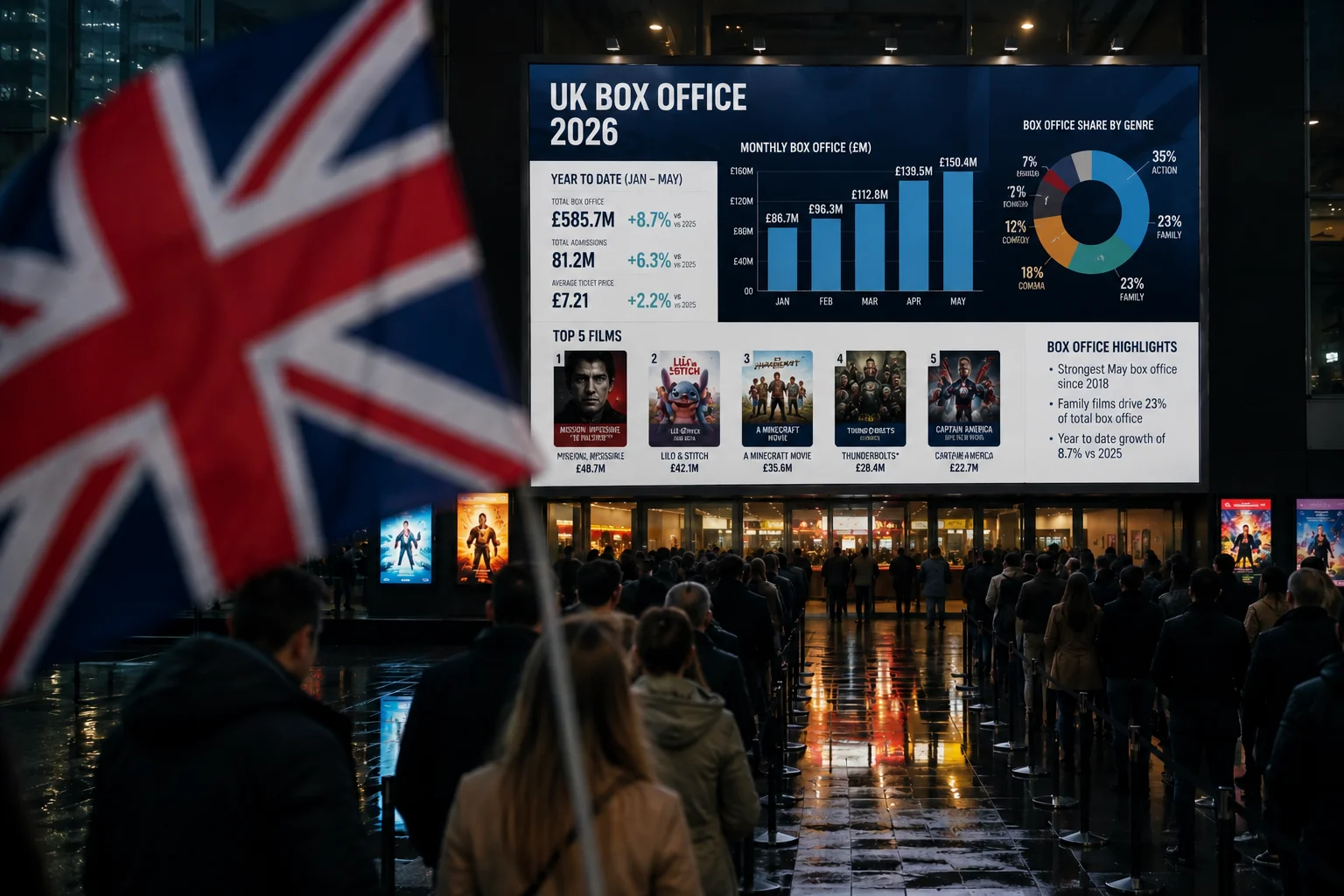
This is also where a lot of filmmakers underestimate how much a proper release plan matters — trailers, a press kit, an email list, and consistent outreach can make the difference between a film that finds its audience and one that quietly disappears into a catalogue. It also helps to understand the wider market you’re releasing into; our Box Office Trends Report 2026 breaks down where audience demand is actually moving.
For filmmakers and production teams looking for support with strategy, content, or media planning around a release, Greenroad Nigeria Limited offers guidance built around real-world distribution realities rather than guesswork.
Common Mistakes Indie Filmmakers Make With VOD Distribution
- Signing an exclusive deal too fast. Locking your film into a single platform before understanding its true audience reach can cost you revenue you’ll never get back.
- Assuming the platform will market the film. Almost none of them will. That’s on you — see our indie film marketing strategy guide for a practical starting point.
- Ignoring the fine print on revenue splits. A platform that “takes 20%” and a distributor deal where revenue sharing runs as high as 50/50 to 70/30 in favour of the distributor are two very different arrangements, and the details matter enormously over the life of a release.
- Choosing prestige over fit. A MUBI placement sounds impressive, but if your film is a commercial horror feature, you’re leaving money and audience on the table by not prioritising a platform like Tubi.
- Treating VOD as a one-time event. The strongest indie releases treat distribution as an ongoing process — building an audience before launch, not just after.
Conclusion
Choosing the best VOD platform for your indie film isn’t about finding the single “right” answer — it’s about matching your film to the audience that already wants to watch it, understanding exactly how you’ll get paid, and going in with a real marketing plan rather than hope. Amazon and Tubi offer scale. MUBI and Kanopy offer curation and prestige. Vimeo offers direct control. Aggregators like Filmhub offer convenience across dozens of platforms at once. Most successful indie releases in 2026 aren’t built on one of these — they’re built on a thoughtful combination of several.
The distribution landscape will keep shifting, and platforms will keep rising and falling in relevance. What won’t change is the need for filmmakers to treat distribution as seriously as they treat production — because a great film that nobody finds is still, functionally, an unseen film.
If you’re planning a release and want an experienced team to help you think through strategy, content, and audience building, get in touch with Greenroad Nigeria Limited, we’d be glad to help you map out a plan that fits your film and your goals.
And if you’d like more insights like this delivered straight to your inbox, sign up for our newsletter to stay ahead of trends in media, distribution, and content strategy.
Frequently Asked Questions
What is the easiest VOD platform for a first-time indie filmmaker to get on?
Amazon Prime Video Direct and aggregators like Filmhub are generally the most accessible starting points, since they don’t require the curatorial approval that platforms like MUBI or Criterion do. That said, “easy to access” doesn’t mean “easy to be seen” — you’ll still need a marketing plan.
How much money can an indie film actually make on VOD platforms?
It varies enormously by genre, platform, and how much marketing effort goes into the release. AVOD platforms like Tubi pay a small amount per stream, roughly $0.002 to $0.008, so revenue scales with audience volume rather than a flat fee. TVOD platforms (rent/buy) can pay more per transaction but usually generate fewer total transactions unless there’s strong existing demand.
Should I use an aggregator like Filmhub, or approach platforms directly?
For most independent filmmakers without an existing distributor relationship, aggregators are the more practical route. They save you the time of negotiating individually with dozens of platforms, and most, including Filmhub, don’t charge an upfront fee — they simply take a percentage of revenue once your film starts earning.
Can I put my film on multiple VOD platforms at once?
Yes, as long as your distribution agreements are non-exclusive. Many filmmakers run a hybrid strategy: a curated or subscription platform for prestige, an AVOD platform like Tubi for reach, and a direct-to-fan option like Vimeo On Demand for higher-margin sales.
Do VOD platforms help market my film?
Generally, no. Most platforms, including the large aggregator-driven ones, expect the filmmaker to handle promotion. Some platforms provide basic assets or dashboard visibility into performance, but active marketing (press, social, email outreach) remains the filmmaker’s responsibility.
Is theatrical release still necessary before going to VOD?
Not anymore, in most cases. The traditional “theatrical first” sequencing has loosened considerably for lower-budget independent films, with many filmmakers going straight to VOD or running a hybrid limited theatrical plus VOD release simultaneously.